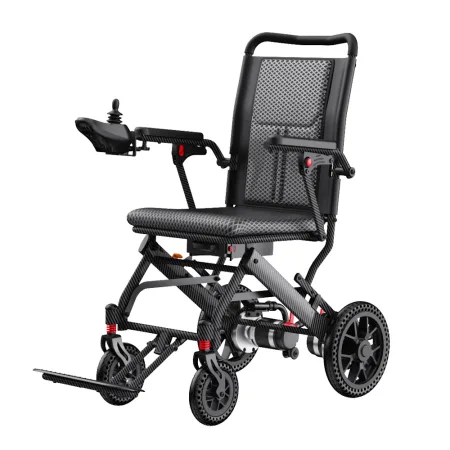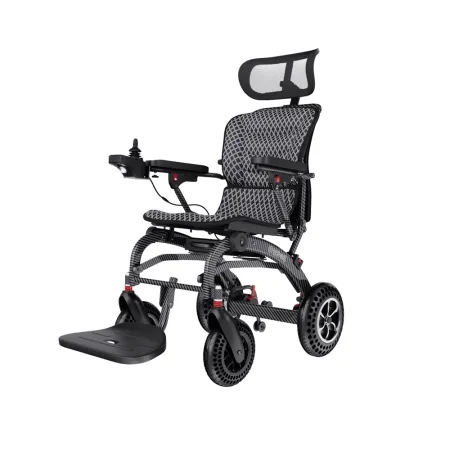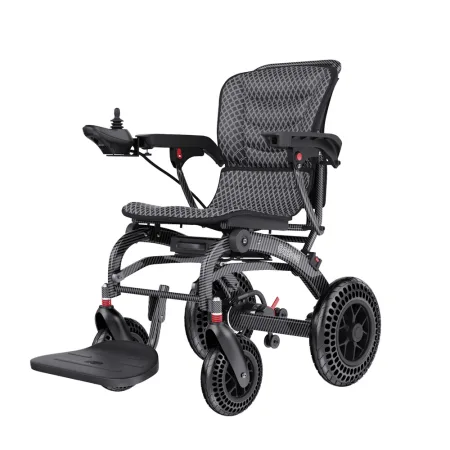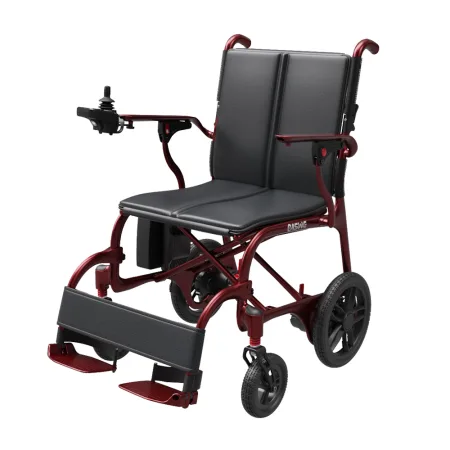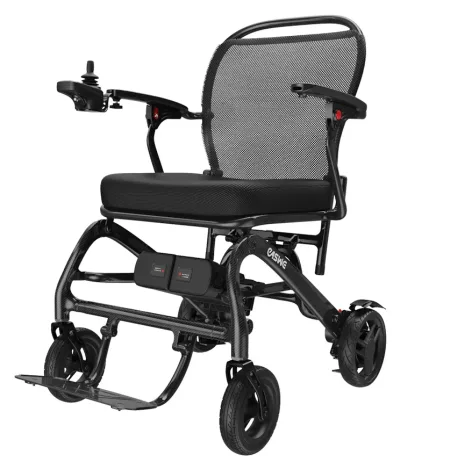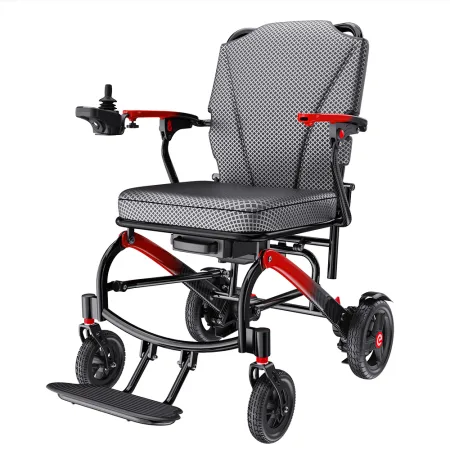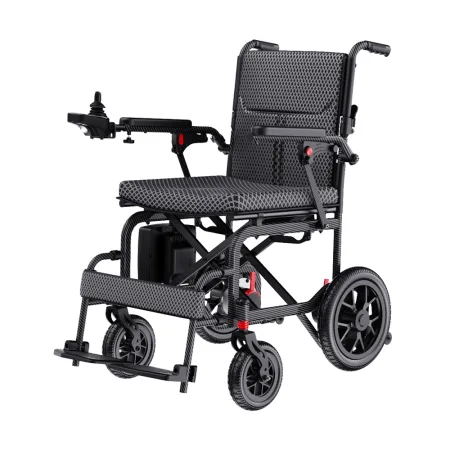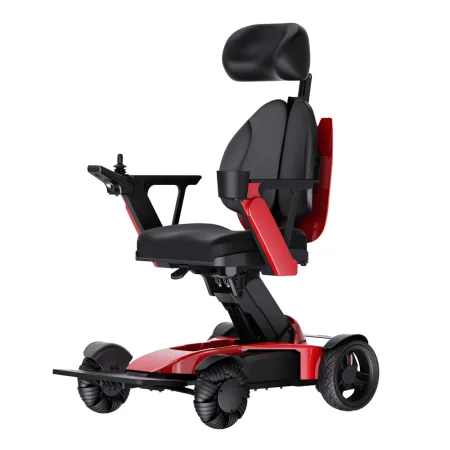




















Carbon fiber has become an increasingly popular material in the electric wheelchair market. Known for its lightweight construction and impressive strength, it is often associated with premium mobility products designed for easy transportation and everyday convenience.
But does a carbon fiber frame actually make an electric wheelchair better?
If you’ve been comparing carbon fiber, aluminum, and other wheelchair frame materials, you’ve probably noticed that carbon fiber models tend to be lighter—and often more expensive. While saving a few pounds can make a real difference, weight isn’t the only factor that determines how comfortable, durable, or practical a wheelchair will be. In this guide, we’ll explain what carbon fiber is, how it compares with other frame materials, and the advantages and potential drawbacks you should consider before buying.
1. What Is a Carbon Fiber Electric Wheelchair?
A carbon fiber electric wheelchair is a powered wheelchair that uses carbon fiber composite material for some or all of its main frame structure.
Carbon fiber composites are made from extremely thin carbon fibers, typically arranged in layers and bonded together using a resin. Once the resin cures, the result is a strong, lightweight structure that can be shaped into different designs.
Unlike traditional metal frames, which are commonly made from aluminum or steel tubes joined together, carbon fiber components are often manufactured through molding and composite layup processes.
Why Is Carbon Fiber Used in Wheelchairs?
Carbon fiber offers several characteristics that make it appealing for mobility equipment:
- Lightweight construction: Carbon fiber composites can achieve high strength and stiffness at a relatively low weight.
- Structural efficiency: Engineers can arrange the fiber layers to reinforce areas that experience greater loads.
- Corrosion resistance: Carbon fiber composites do not rust like steel.
- Design flexibility: Composite molding allows manufacturers to create lightweight structures with complex shapes.
However, not every carbon fiber wheelchair is constructed the same way. The amount of carbon fiber used, the frame design, the manufacturing process, and the quality of the finished product can all affect performance.
2. What Are the Advantages of a Carbon Fiber Electric Wheelchair?
Lightweight and Easier to Lift
One of the biggest reasons people choose carbon fiber electric wheelchairs is their weight. Traditional aluminum-alloy electric wheelchairs can weigh around 31–66 lb, while carbon fiber models typically weigh approximately 20–35 lb.
For someone who regularly loads a wheelchair into a car, travels with family members, or needs to store the chair in a small space, even a modest reduction in weight can make daily routines easier. This is especially relevant for caregivers or family members who handle the wheelchair during transportation.
When comparing models, however, always check whether the advertised weight includes the battery. Most lightweight electric wheelchairs use removable batteries, allowing users to take out the battery before lifting or transporting the chair. For this reason, some manufacturers list the wheelchair’s weight without the battery.
Convenient for Travel and Storage
Carbon fiber electric wheelchairs can be particularly attractive to people who travel frequently. Some foldable carbon fiber electric wheelchairs can be folded in as little as 10 seconds, making them especially convenient for travel and everyday transportation.
A lightweight frame, combined with a practical folding mechanism, can make a wheelchair easier to:
- Load into a car trunk
- Carry during transportation
- Store in hotel rooms
- Move through airports
- Keep in smaller living spaces
However, carbon fiber alone doesn’t guarantee that a wheelchair is easy to travel with. A chair that weighs less but has a complicated folding mechanism may actually be less convenient than a slightly heavier model that folds quickly and securely.
For air travel, battery specifications and airline requirements are also important. Before purchasing, be sure to check with both the wheelchair manufacturer or seller and your airline to confirm whether the wheelchair and its battery meet the airline’s requirements.
Strong and Rigid Frame Structure
Carbon fiber composites have an excellent strength-to-weight ratio when properly designed and manufactured. This allows manufacturers to create relatively lightweight frames that can still meet substantial load requirements.
Another advantage is their corrosion resistance. Unlike traditional metal frames, carbon fiber composites do not rust. They can also offer good resistance to salt spray and certain cleaning chemicals, although this depends on the resin system and surface coating.
But there’s an important distinction between strength and weight capacity. A carbon fiber wheelchair isn’t automatically capable of supporting more weight than an aluminum wheelchair. Maximum user weight depends on the design and testing of the complete wheelchair, including its frame, joints, wheels, motors, and other components.
Always check the manufacturer’s specified weight capacity rather than judging durability by the frame material alone.
3. What Are the Disadvantages of Carbon Fiber Electric Wheelchairs?
Although carbon fiber has impressive advantages, it isn’t necessarily the best choice for every wheelchair user.
Higher Purchase Price
Carbon fiber composite components can be more expensive to manufacture than conventional metal parts. The materials, molding processes, quality control, and specialized manufacturing equipment can all contribute to higher production costs. As a result, carbon fiber electric wheelchairs are often positioned in the premium lightweight category.
For some buyers, the additional cost is justified by the reduced lifting weight. For others, a well-designed aluminum wheelchair may provide a better balance between price, portability, and everyday functionality.
The most important question is whether the weight savings are meaningful enough for your own needs.
Potentially More Complicated Frame Repairs
Carbon fiber and metal behave differently when damaged. Metal frames may bend, dent, or deform under certain loads. Carbon fiber composites can instead develop cracks, delamination, or damage within their layered structure.
Because some damage may not be immediately visible, a significant impact should be taken seriously. For example, dropping a wheelchair during loading or hitting a solid obstacle could potentially damage a composite frame.
It’s important to distinguish ordinary cosmetic scratches from structural damage. A surface scratch does not automatically mean that the frame is unsafe, but visible cracking or damage after a substantial impact should be inspected by a qualified service provider.
Repairs may also be more complicated than with conventional metal frames. Some carbon fiber wheelchair designs use large integrated frame components. Depending on the manufacturer and the location of the damage, replacement of an entire frame section may be necessary. Metal wheelchairs with separately replaceable frame components may be easier or less expensive to repair in certain situations.However, this varies considerably between models.
Before buying: Check whether replacement frame components are available, how structural damage is handled, and what the manufacturer’s warranty actually covers.
Ride Comfort Depends on More Than the Frame
Carbon fiber is often associated with high stiffness, particularly in applications such as performance bicycles.
This raises an important question:
Does a carbon fiber electric wheelchair feel less comfortable on uneven ground?
Not necessarily. A very rigid frame may transmit some vibrations from the wheels to the seating area, but the actual riding experience depends on several other factors, including:
- Suspension design
- Tire material and size
- Seat cushioning
- Wheelbase and frame geometry
- Travel speed
- Ground conditions
For example, a carbon fiber wheelchair with an effective suspension system and a comfortable seat may offer a smoother ride than an aluminum wheelchair without these features. Similarly, a rigid aluminum frame can transmit vibrations on rough surfaces. This means frame material alone is not a reliable way to predict ride comfort.
If you frequently travel over paving stones, uneven sidewalks, or other rough surfaces, pay particular attention to the suspension, wheels, and seating—not just whether the frame is carbon fiber or aluminum.
4. Carbon Fiber vs. Aluminum: Which Is Better?
Carbon fiber isn’t the only material used in electric wheelchair frames. Aluminum remains a common choice, and some lightweight wheelchairs also use magnesium alloys.
Each material offers a different balance of weight, cost, durability, and serviceability.
| Feature | Carbon Fiber | Aluminum Alloy |
|---|---|---|
| Weight | Often very lightweight | Lightweight |
| Material cost | Typically higher | Generally more affordable |
| Corrosion resistance | Good | Good |
| Structural behavior | Composite damage may involve cracks or delamination | Can bend or deform under excessive loads |
| Repairability | May require specialized assessment or component replacement | Often practical to repair or replace components, depending on design |
| Best suited for | Weight-conscious travel and portability | Balanced everyday use |
These are general material characteristics, not guarantees about every wheelchair.
For example, a carefully engineered aluminum wheelchair can be lighter than a poorly optimized carbon fiber design. Likewise, the durability of the complete chair depends on construction quality, connections, load distribution, and how the product is used.
Is Carbon Fiber Always Better Than Aluminum?
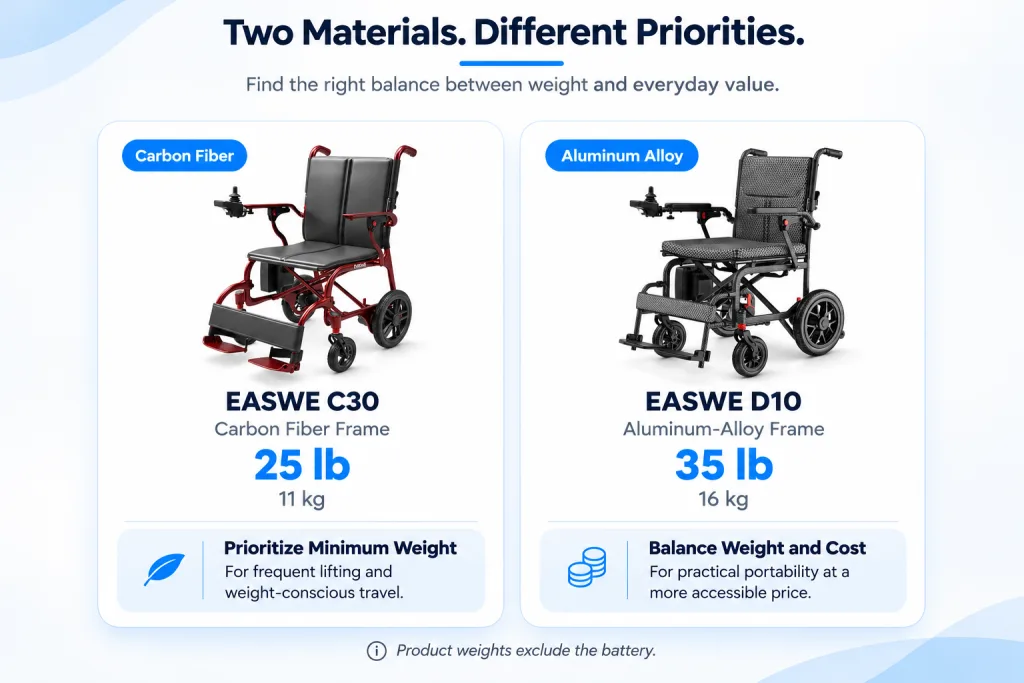
No. If lifting weight is your biggest concern, carbon fiber may offer an advantage. But if you value affordability, repairability, or a particular suspension and seating design, an aluminum wheelchair could be an equally good or better choice.
Take the EASWE C30 and D10 as examples. The C30 features a high-quality carbon fiber frame and weighs just 25 lb without the battery, making it light enough for some users to lift with one hand, although it comes at a higher price. Meanwhile, the aluminum-alloy D10 weighs only 35 lb without the battery and offers similar key features at a more affordable price.
Instead of asking which material is universally superior, consider which wheelchair best suits your daily activities.
5. Who Should Consider a Carbon Fiber Electric Wheelchair?
Carbon fiber electric wheelchairs may be particularly appealing for certain users.
People Who Frequently Travel by Car
If you regularly need to lift your wheelchair into a vehicle, reducing its weight can make transportation more manageable. A compact folding design can offer additional convenience, particularly for people with limited trunk space.
People Who Travel Frequently
A lightweight electric wheelchair can simplify aspects of travel, from navigating hotels to organizing transportation. For frequent travelers, portability may be worth paying extra for.
People with Limited Storage Space
Many carbon fiber wheelchairs are designed with portability in mind, and some feature compact folding mechanisms. This can be helpful if you live in an apartment or need to store your wheelchair in a small space.
Buyers Who Prioritize Minimum Weight
If your main goal is to find the lightest suitable electric wheelchair, carbon fiber models deserve serious consideration. Even so, compare the complete specifications rather than focusing on a single advertised weight figure. A slightly heavier wheelchair may offer features that are more valuable for your particular lifestyle.
6. When Might an Aluminum Electric Wheelchair Be a Better Choice?
Carbon fiber isn’t necessarily the right investment for everyone. An aluminum electric wheelchair may be worth considering if:
- You have a limited budget and want to prioritize essential features.
- You rarely need to lift the wheelchair into a vehicle.
- You prefer a design with accessible, replaceable frame components.
- A small difference in lifting weight would not significantly affect your daily routine.
Aluminum frames can provide a useful combination of relatively low weight, strength, corrosion resistance, and cost efficiency. For many users, a quality aluminum electric wheelchair may offer all the portability they need without the higher cost often associated with carbon fiber models.
7. What Should You Check Before Buying a Carbon Fiber Electric Wheelchair?
Before making your decision, it helps to compare actual wheelchair specifications rather than relying on frame material alone.
Here are seven practical questions to ask.
1. How much does the wheelchair really weigh?
Check the weight with and without the batteries. If you plan to lift it regularly, consider whether the weight is manageable for you or your caregiver.
2. How easy is it to fold?
Look at the folding mechanism, folded dimensions, and whether the wheelchair stays securely folded during transportation.
3. Is the seat comfortable?
Check the seat width, depth, backrest support, and cushioning. Comfort becomes particularly important if you expect to spend extended periods in the chair.
4. Does it have suitable suspension and wheels?
Consider the types of surfaces you’ll encounter most often. Smooth indoor floors and uneven outdoor paths may place different demands on a wheelchair.
5. Does it support your weight?
Always follow the manufacturer’s maximum user weight specification and consider any additional items you regularly carry.
6. What happens if the frame is damaged?
Find out whether frame parts can be replaced, what after-sales support is available, and how the warranty handles manufacturing defects versus accidental damage.
7. Does it fit your budget and daily routine?
Think about the total value of the wheelchair rather than only its purchase price. Battery configuration, comfort, portability, serviceability, and long-term support all matter.
8. Is a Carbon Fiber Electric Wheelchair Worth It?
For the right person, absolutely. Carbon fiber can be an excellent choice when keeping the wheelchair as light as possible is a major priority. If you travel frequently, regularly load your wheelchair into a car, or simply want to minimize the amount of weight you have to handle, the benefits can be meaningful.
But carbon fiber is not automatically the best material for every electric wheelchair user. A lighter frame doesn’t guarantee greater comfort, better durability, or easier maintenance. Those qualities depend on the complete design of the wheelchair. And if you’re comfortable with a slightly heavier chair, a well-designed aluminum model may provide comparable everyday convenience at a more accessible price.
Ultimately, the best electric wheelchair isn’t necessarily the lightest or the most expensive—it’s the one that fits your body, your routine, and the way you actually travel. Whether you choose carbon fiber or aluminum, focus on the features that will make the biggest difference in your daily life.
Explore EASWE’s range of lightweight and foldable electric wheelchairs to compare different designs, materials, and features before making your decision.
Frequently Asked Questions
Are carbon fiber electric wheelchairs stronger than aluminum ones?
Carbon fiber composites offer an excellent strength-to-weight ratio, but this does not automatically make every carbon fiber wheelchair stronger than an aluminum model. Overall strength and weight capacity depend on frame design, manufacturing quality, and the complete wheelchair structure.
Do carbon fiber wheelchairs break easily?
A properly designed carbon fiber wheelchair can be strong and durable during normal use. However, significant impacts can cause composite damage, including cracking or delamination. Any suspected structural damage should be assessed according to the manufacturer’s guidance.
Are carbon fiber electric wheelchairs more comfortable?
Not necessarily. Frame stiffness can influence vibration transmission, but comfort is also affected by suspension, tires, seat cushions, and wheelchair design. A carbon fiber frame alone does not guarantee a smoother or harsher ride.
Can carbon fiber wheelchair frames be repaired?
Repair options depend on the manufacturer and the type and location of damage. Some frames or sections may need replacement rather than repair. Contact the manufacturer or an authorized service provider for an assessment.
Is carbon fiber worth the extra money?
It may be worth the investment if reducing lifting weight makes a meaningful difference to your daily routine. If your priorities are affordability, serviceability, or specific comfort features, an aluminum electric wheelchair may offer better overall value.